
As someone who is not from the Czech Republic, I get a number of questions that my Czech colleagues may not be asked. The main one I get, often in whispered inquiry, is “Are Czech people rude?” And, truthfully, it was a question I had when I first arrived. After living here for a decade, I will answer no, with a caveat.
Certainly, there are some Czechs who are rude. You have the same in your hometown, don’t pretend you don’t. But there is a cold shoulder here that you may find in certain situations. Let’s dive into why there is sometimes a chilly reception.
Czech People and the “Cold Weather Culture”
First, let’s discuss some boring social science stuff. Cultures in colder regions tend to be more reserved and introspective, whereas cultures in warmer regions are usually more socially open. Obviously, there are examples of countries where this is not true, but overall, most countries tend to fall into these categories. Thus, usually, in colder areas, people take longer to warm up to new visitors. And one thing about this country, it can get cold, really cold.

Czech Politeness Is Real (and Formal)
Greetings That Go a Long Way
Second, there is a politeness that is almost hidden from view. Whenever you enter an establishment, the first thing a Czech does is say “Good Day” (dobrý den). I don’t mean they might do this, they will greet you with “Good Day”. It is a bit more formal than an English speaker saying “Hello” or “Hi”. This is due to the language having a formal and informal set of rules and words.
If I meet someone for the first time, interact with a professional or someone older than me, I would use the formal “Good Day”. If I see a friend, I would be more likely to say, “Ahoy” or “Čau”, which is more aligned with the English “Hi”.
With the formal, you deal with the business and then move on. It isn’t seen as rude, just practical. At an office or store, you are there for business, not for friendship. I will quickly add, as a tourist, they understand that you don’t speak their language, so do not feel obliged to try to learn any of this. The Czech language can hurt the mouth. Really, I’m not kidding.

Czech People and the “How Are You?”
Another thing they don’t get is the American “how are you”. They wonder why you care; to them, it is a strange question, but you will get an answer. They will explain every problem and pain that they have encountered that week. As Americans, we really don’t want the question answered. “How are you?” is just a mindless greeting. Maybe leave this greeting back in the States; otherwise, you may learn more about a person than you are prepared to know.
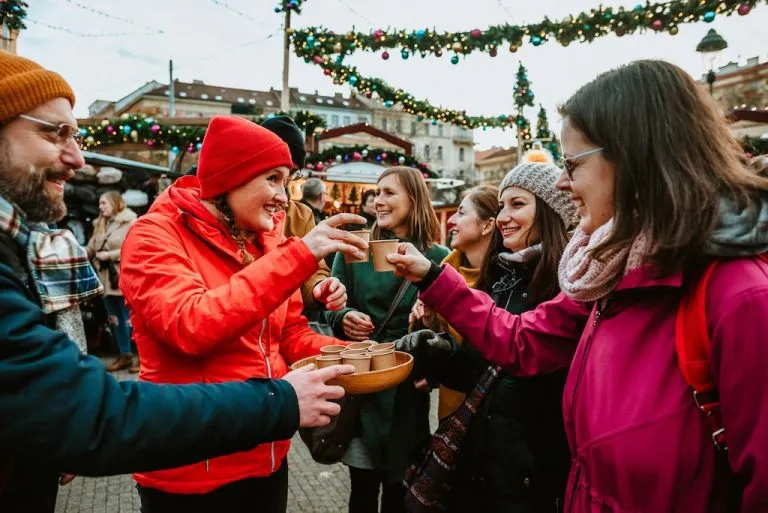
Of note, if you are in the tourist area, they will be more open and friendly. They know tourists are here for an enjoyable stay, and they do want to make you feel welcome in their city. Czechs are proud of the city, the food, and most of all, the beer.
You may protest, “but why didn’t the cab driver speak to us on the way from the airport?”, or “I went into a shop and asked where something was, and they just pointed, no customer service.” Well, to help you out, we need to dive a bit into Czech history.

The History Behind the Cold Shoulder
For around 400 years, the Czech people were under the Austro-Hungarian Empire. In 1918, they got their own country. Hooray! Then the Nazis showed up in 1938. They are gone by 1945, but it takes a bit of time to heal after the cruelty of WWII. Before they have time to deal with that, Stalin and his communism show up. That didn’t end until very late in 1989. You can imagine they have become accustomed to keeping things to themselves, and that leaves its mark socially.
You can now see why the younger generation might feel a bit more open since they didn’t live through it, but even then, cultural habits take a generation or two to change, maybe more. Overall, foreigners are not trusted. Look at it this way: for around 500 years, foreigners showed up here, then never left, hanging their dirty laundry everywhere.

How Silence is Seen in the Czech Republic
Back to the quiet cab ride… overall, there isn’t a feeling of discomfort in silence for the Czechs. They aren’t like the Finnish, who almost don’t even have small talk, but with strangers, silence is the go-to.
Honestly, as a person from the South in the US, this drove me nuts for the first few years. Where I am from, you can end up hearing about the cashier’s morning while being checked out. We will hug people we hardly know and talk for hours to someone we have just met. Nowadays, if I take an Uber or Bolt in Prague, I say “good day” and pull out the phone to check emails while we drive.
Customer Service in Prague
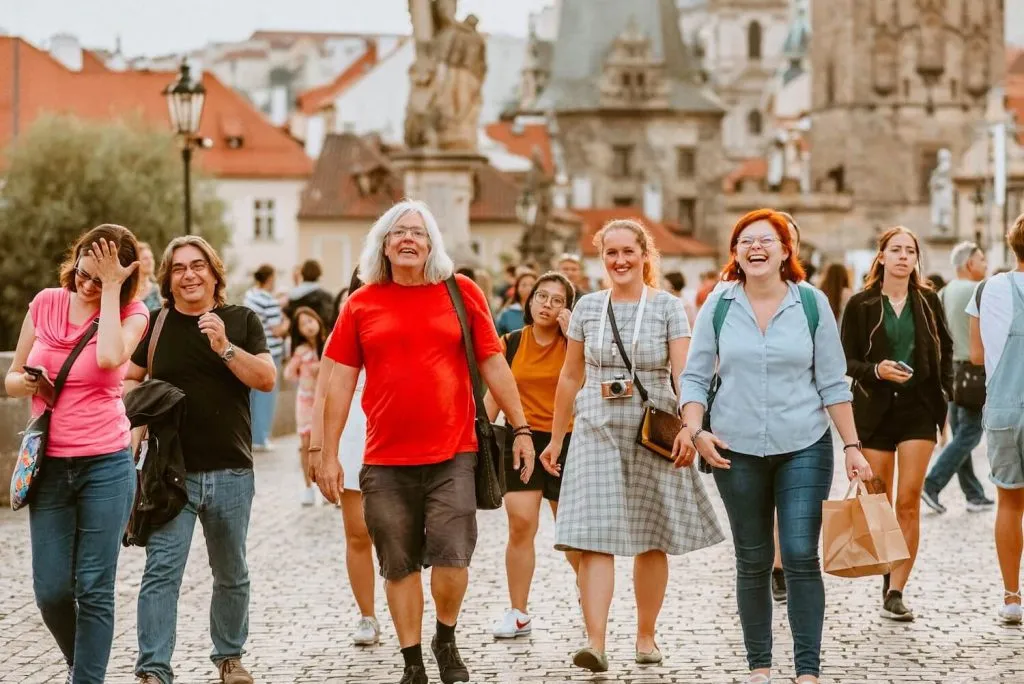
Even with all this explanation, Czechs will be the first to tell you they are not the best rated in customer service. I would say, mainly outside the tourist area. If you go to a five-star restaurant, a fine clothing store, or any upper-end shops, you will be treated like a five-star customer. A fine hotel, you will be treated well, fine.
Most Czechs are courteous, but when you get a grumpy one, rather than confront them, enjoy the grumpy Czech show. As one Czech friend called it, this is your “communist small talk.” To add, complaining about it will get you nowhere.

Quick Czech Temper to Watch Out For
Another thing I see and have dealt with on a few occasions is a Czech blowing up in anger. Then, after just a couple of minutes, they are back to normal. As an example, there is a cafe I often go to. I went to the restroom, and the turnstile in front had jammed. I gave it a good push to get it to move, and the waiter came over yelling about how I shouldn’t do this and how I am acting so stupid. Mind you, this is a guy I had seen for a couple of years, and though not friends, we exchanged pleasantries. He fixed it, I went on my way, and when I got back to the table, he was his usual friendly self. Not a trace of anger.
Another example, I was dating a Czech woman who would, sometimes, get mad at me. I have no idea why. She would let me know, under no uncertain terms, she was angry, but five minutes later, she would be back to normal, wondering when we were leaving for dinner. Me, if I work up a good anger, I will hang onto it for a few hours. I didn’t work that hard for nothing. The Czechs tend to let their displeasure show, then they go back to normal. I have no idea how this works, but there it is.

The Dark Side of Czech Humor
One final thing I want to mention is Czech humor. Often it is dark and politically incorrect. In fact, it is the incorrectness that seems to make it funny. They pick on the Polish who pick on the Czechs right back. They pick on the Ukrainians, though they still support them against Russia. The residents of Prague pick on the city of Brno. The Russians, well, there might be some downright hate there after communism.
So, Are Czech People Rude?
There is an old saying: “Czechs are like hard, crusted bread – hard to get to know, but once you crack through the crust, you find the warm center.” I have found good friends here in the Czech Republic and, with just a small amount of understanding, you will too.
If you want the “warm center” version of Czech people a little faster, feel free to join one of our Prague tours. Our guides will happily translate the silent moments, the “dobrý den” rules, and the occasional grumpy Czech cameo. Plus, we’ll feed you well while we’re at it.
And, if you liked the expat lens here, you might enjoy my other deep-dive: An Expat’s Guide to Czech Food and Dining Habits. Get the practical stuff locals won’t explain, plus what to eat (and how to order) without overthinking it.

Frequently Asked Questions About Czech People
How do I greet people in the Czech Republic?
The safest, most universally appreciated greeting is “Dobrý den” (good day). You can use it in shops, cafés, hotels, pretty much anywhere, without overthinking the time of day. When you leave, “Na shledanou” (goodbye) is the polite exit line, and sprinkling in “Děkuji” (thank you) and “Prosím” (please / you’re welcome) instantly reads as a respectful effort, even if your pronunciation isn’t perfect.
Are people in Prague friendly to tourists?
Generally, yes, but in a more reserved, practical way than many English-speaking visitors expect. In the center and tourist-facing places, people are used to visitors and interactions are usually smooth; outside the tourist bubble, the vibe can feel quieter and less chatty, which can be misread as unfriendly when it’s really just a different default setting.
How do Czech people feel about Americans?
On a person-to-person level, Americans are usually received just fine, especially in Prague. You’ll often meet with curiosity and a pretty neutral-to-friendly vibe once you get past the initial “reserved face.” The tricky part is that many Czechs don’t separate Americans from U.S. politics: you might hear blunt opinions about what’s happening in the States, even if that doesn’t automatically translate into hostility toward you as a visitor. If you’re respectful, don’t lead with politics, and show basic cultural awareness, you’ll almost always get a good experience.
What is the customer service like in Prague?
Customer service in Prague tends to be efficient and straightforward, not the big-smiles-and-small-talk style you might be used to in the US or parts of Canada and Australia. You’ll often get exactly what you need, just with fewer “checking in on you every five minutes” moments. In more upscale hotels and restaurants, the service style is typically more “international,” so it can feel closer to what you’d expect at home.
What is the biggest etiquette mistake to avoid in Prague?
The easiest way to accidentally rub people the wrong way is to treat Prague like it runs on tourist autopilot. A quick greeting when you enter a small shop or café goes a long way, and on public transport it helps to be visibly considerate: don’t block doors, let people exit first, and keep your space tidy when it’s crowded. These are small things, but they’re exactly the kind of “signal” locals notice. For more practical tips, check out our guide on How Not to Piss off the Czechs in Prague.
Do I need to tip in the Czech Republic?
Tipping isn’t a strict obligation, but it’s common to leave something when you’re happy with the service. In restaurants, many locals either round up or tip around 5–10%, and if you’re paying by card, it’s normal to tell the server the total you want charged (bill plus tip) before they process the payment. Cash tips are often appreciated too, especially for small amounts.
What are the Czech people proud of?
A lot of things, but two come up fast: beer and ice hockey. Czechia has one of the strongest beer cultures on the planet, where beer is treated less like “just a drink” and more like a social ritual with its own rules, pride, and traditions. The country has long ranked at the top for per-capita beer drinking, and for a good reason. When it comes to sports, ice hockey is a genuine national obsession, a source of shared identity and “we’re all watching this together” pride that cuts across generations.